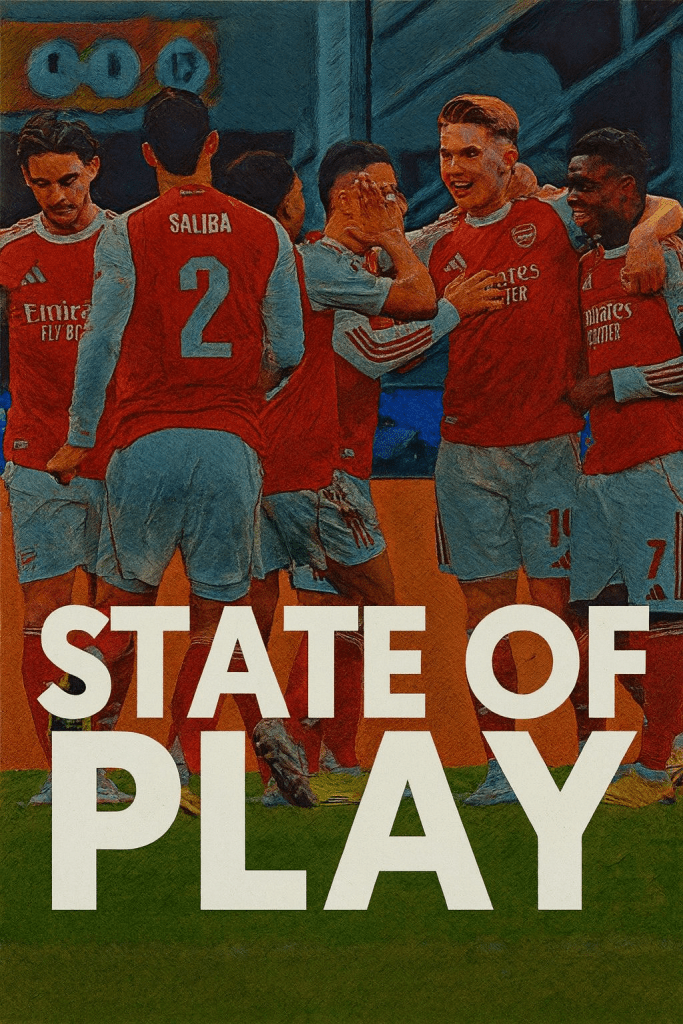
So I’m back after a few weeks away, mainly due to work commitments and some studying I’m undertaking for a qualification. But since the last blog, it’s been a couple of interesting weeks in all things Arsenal. We’ve had some lacklustre goalless draws in the league, a good first‑leg performance in the Carabao Cup semi‑final (albeit with a tinge of regret), wins in the FA Cup, and of course a great 3–1 victory last night at the San Siro.
All in all, it’s been a real variety of emotions lately; disappointment with certain league performances, but also the happiness of seeing our lead at the top somehow extend even further. With games coming thick and fast, the expectation of consistently high‑level performances across football feels unrealistic. Managers are forced to chop and change week to week, and those without the squad depth we currently enjoy really suffer with player load and injuries but some games feel clunky with so many changes.
I think Arteta has generally managed these last four games quite well, even if Nottingham Forest was a frustrating evening. What’s clear is how much he has adapted his approach over the last year. Previously, Bukayo would be playing week in, week out, in every competition. Now, the luxury of having someone like Noni Madueke means you can trust him to come into a variety of games — even against top‑level opposition — without a vast drop in quality.
Which brings me to the focus of this week’s blog; the difference in gameplan between Europe and the Premier League. As has been the case for a few seasons now, Arsenal often struggle in games where low blocks are the main setup. As discussed in previous blogs, our strength at set pieces has been a huge advantage in unlocking those types of matches in the league this season.
Europe, though, is the complete opposite. Games feel more fun to watch as a fan — teams go blow for blow, and it becomes more of an ego battle of gameplans rather than simply trying to survive for 90 minutes. Arsenal look set up once again to go far in the Champions League; just two goals conceded and the most scored in the league phase. The ability to rotate has kept the side fresh, as we saw away at Inter. Gabriel Jesus reminded us what he can do — not just the goals, but the hold‑up play. And with the game opening up late on, it suited Gyökeres perfectly, finishing smartly to see it out.
With the game more stretched and space to run in behind, I do wonder if we’ll see this dynamic more in the league. Jesus starting against well‑organised low blocks, using his skill, technique and style to open games up as a facilitator; then Gyökeres coming on late when the match is stretched, giving us a different threat for the final twenty minutes.
As we head into the latter stages of the season, the reality is that the league won’t be an easy or comfortable watch — more of a slog. It’s about ticking the games and points off. Europe, on the other hand, feels like a more open book. Being a cup competition helps, but the depth of the squad right now is so vast that we have different combinations and players to fight on both fronts. With the way teams set up in Europe, the space and opportunity for creativity puts us in great stead going into the knockouts.
Contrast that with the league, where we need to find new ways to unlock teams, especially away from home. As the game ticked on at the City Ground on Saturday evening, even after the changes from the bench, we seemed stuck in a cycle of passing between defenders and midfielders. The team is drilled to shift the ball sideways, create space for the switch, but Forest read it well. It made me wonder whether there’s an opportunity to play Eze more — he needs minutes to play himself back into the side given. I’m looking at Kairat next week as another chance for him, perhaps alongside Ødegaard, who at Forest was outmuscled, doubled up on, and ultimately ineffective. Another creator in the middle would occupy defenders and make us less predictable. It’s hard to drop either Zubimendi or Rice, but some matches may need something a little different.
Squad‑wise, Arteta has some nice selection problems at the moment. All three strikers are available, the midfield is well stacked, and the only real issue is the left side of defence. It was encouraging to see Lewis Skelly looking more confident — more like the player who burst onto the scene last season — with his performance at the San Siro. Until Hincapié and Calafiori return, Skelly may give us more balance, with Timber back on the right after covering the opposite side. He did generally okay against some tricky wingers, but the lack of a natural left‑footer does hinder our attacking threat and overlap on that side. Forest clearly targeted that weakness, pushing down their right and overloading the area.
Now we look ahead to a huge game on Sunday, with Michael Carrick’s Manchester United visiting, full of confidence after the derby win. We go in as favourites, and perhaps this is another game that might suit Arsenal, with United being more open and attacking since Amorim left and the system changed, they will also be dangerous on the break. It won’t be easy, but the team should be well rested after the rotation in the Champions League on Tuesday. I also think the bench may be key on Sunday — and that’s exactly why it has been built the way it has, to ensure we can challenge on all fronts.
Just a quick blog to get back into the swing of things. Until next week — I’ll share some thoughts after Sunday’s game. COYG.
 The View From Block 107
Leave a comment